In growing urban agglomerations, different interests compete for scarce space: the need for residential and commercial areas, infrastructure expansion, and the preservation of green spaces are often in conflict. This competition frequently leads to the sealing and degradation of valuable soils, impairing their biological, hydrological, and climatic functions.
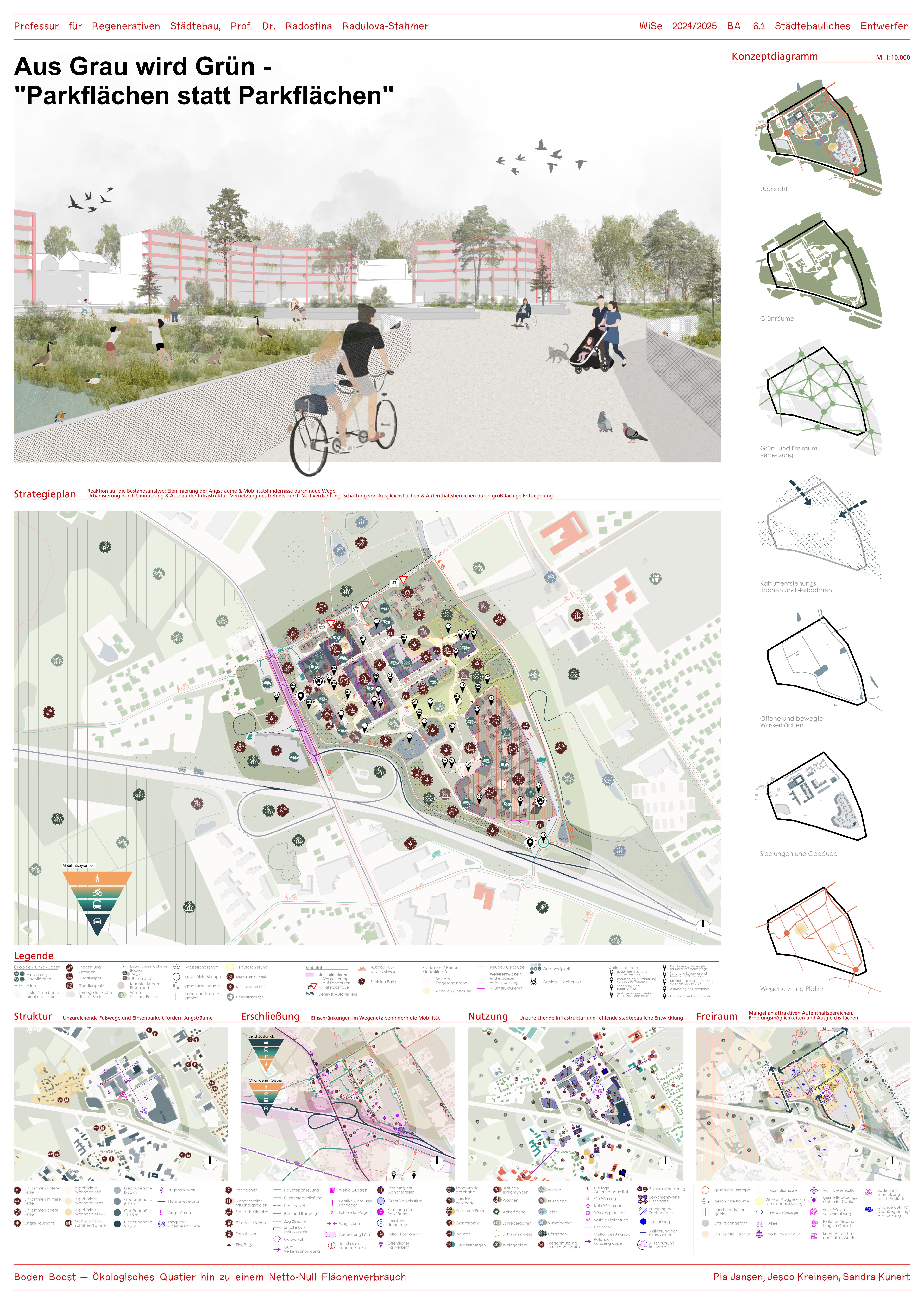
Using the example of the retail area in Wechloy, north of the highway, we explore how this low-density retail development—with its sparse buildings, limited land-use intensity, and extensive sealed surfaces—can be transformed into a vibrant, mixed-use, and ecologically valuable urban district.
Working in groups of three, we will regularly visit the site, collaborate with NABU Oldenburg, produce a large-scale axonometric drawing instead of a physical model, and develop innovative spatial strategies and design concepts for a climate-positive, lively, mixed-use neighborhood embedded in a natural environment.
The paradigm of net-zero land consumption is fundamental to reducing anthropogenic pressure on soils and preserving ecologically valuable open spaces within urban agglomerations.
This project addresses the growing demand for a circular land-use economy. To achieve the ambitious goal of net-zero land consumption by 2050, the German government is pursuing far-reaching and innovative spatial planning strategies. These measures aim not only to drastically reduce land consumption but also to significantly enhance the sustainability of urban development.

© 2026 Regenerative Urbanism. All rights reserved. Imprint Privacy Policy